
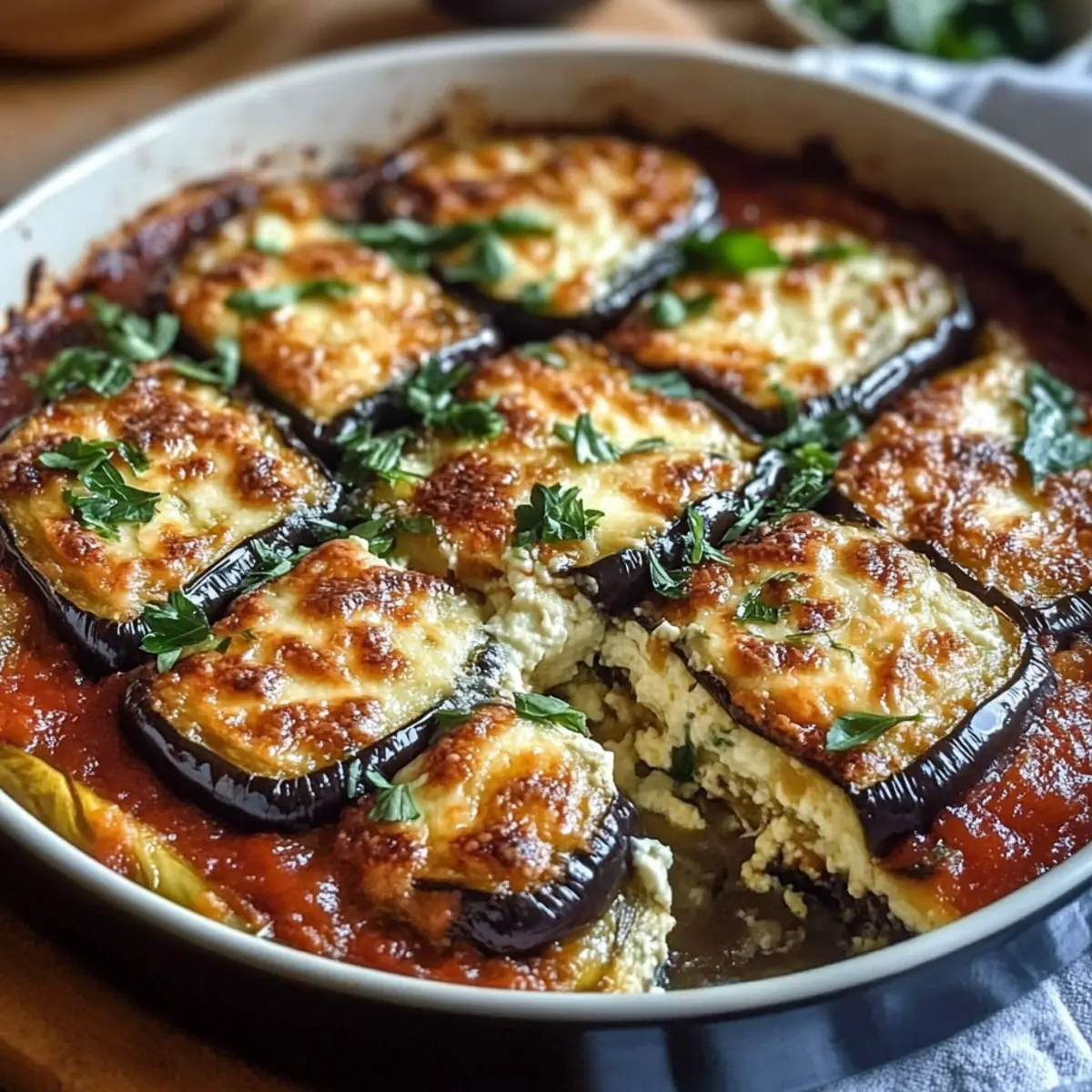
Every bite of this Ricotta Eggplant Casserole whispers stories of sun-drenched Italian gardens. The dish layers tender eggplant, creamy ricotta, and rich tomato sauce to create a warm embrace on a plate that feels both indulgent and healthy. Perfect for those weeknight dinners when you want to impress without the fuss, this comforting vegetarian delight stands out not just for its flavors but also for its simplicity. With just a few fresh ingredients, you can transform your kitchen into a rustic Italian eatery that’s sure to please the entire family. So, are you ready to dive into this delicious twist on comfort food? Let’s get cooking!
Why Is This Casserole a Game-Changer?
Comforting Layers: The Ricotta Eggplant Casserole features an irresistible combination of tender eggplant, luscious ricotta, and rich tomato sauce—each layer creates a symphony of flavor that warms the heart.
Versatile Cooking Methods: You can easily choose to bake or pan-fry your eggplant, making this recipe adaptable to your cooking style or kitchen equipment.
Healthy & Wholesome: Packed with nutritious ingredients, it’s a guilt-free comfort food option full of vibrant vegetables.
Impressive & Effortless: Perfect for weeknight dinners or casual gatherings—this casserole is sure to impress without requiring gourmet skills.
Leftover Magic: Enjoy delicious leftovers, as the flavors only get better with time. Store them in the fridge for up to three days or freeze for later!
If you’re looking for more comforting casseroles, check out my Cowboy Casserole Savory and Sour Cream Casserole recipes that showcase how simple and satisfying home-cooked meals can be!
Ricotta Eggplant Casserole Ingredients
Get ready to gather the goodness!
For the Eggplant
- Eggplant – Main vegetable; provides texture and nutrient base; use globe, Italian, or Japanese varieties for different flavors.
- Olive Oil – Adds richness and flavor; can substitute with avocado oil for a lighter taste.
- Salt – Essential for salting the eggplant to draw out excess moisture and bitterness.
For the Sauce
- Onion – Aromatic base for the sauce; adds sweetness; shallots can be used as a milder alternative.
- Garlic – Enhances flavor profile; essential in Mediterranean dishes; fresh is preferred, but garlic powder can suffice.
- Crushed Tomatoes – Forms the main body of the sauce; adds acidity; canned tomatoes are convenient, or use fresh seasonal options.
- Tomato Sauce – Complements the crushed tomatoes; helps with sauce consistency; any brand available works well.
- Dried Oregano – Adds herbal notes; a staple in Italian cooking; can substitute with Italian seasoning.
- Dried Basil – Complements tomato flavors; if fresh herbs are available, use them for enhanced flavor.
- Red Pepper Flakes (optional) – Adds a touch of heat; adjust to taste; substitute with fresh chili for a different kind of spice.
- Salt and Pepper – Essential for seasoning; to taste.
For the Cheese Mixture
- Ricotta Cheese – Adds creaminess and structure; substitute with cottage cheese for a lighter version.
- Parmesan Cheese – Deepens flavor and adds a savory note; nutritional yeast can be used for a vegan alternative.
- Egg – Binds the ricotta mixture; omit for a vegan option or use a flax egg (1 tbsp ground flaxseed + 2.5 tbsp water).
- Fresh Parsley – Adds brightness; optional garnish; any similar herb like basil or cilantro can be used.
For the Topping
- Mozzarella Cheese – Adds gooey texture; a must for a comforting casserole; swap with provolone for a different taste.
With these ingredients ready, you’re one step closer to creating a heartwarming Ricotta Eggplant Casserole that your family will love!
Step‑by‑Step Instructions for Ricotta Eggplant Casserole
Step 1: Prepare the Eggplant
Slice the eggplant into 1/4-inch rounds and place them in a colander. Generously sprinkle salt over the slices and let them sit for 30 to 60 minutes to draw out moisture and bitterness. After time is up, rinse the eggplant under cool water, pat dry with paper towels, and set aside for layering in the Ricotta Eggplant Casserole.
Step 2: Make the Tomato Sauce
In a large skillet, heat a couple of tablespoons of olive oil over medium heat. Add a diced onion and sauté until translucent, about 5-7 minutes. Stir in minced garlic and cook for an additional 1-2 minutes until fragrant. Then, pour in the crushed tomatoes and tomato sauce, adding dried oregano, basil, and your preferred seasoning. Allow the sauce to simmer for 30 minutes, stirring occasionally.
Step 3: Prepare the Ricotta Mixture
In a mixing bowl, combine ricotta cheese, grated Parmesan, a beaten egg, and finely chopped fresh parsley. Season the mixture with salt and pepper to taste. Stir thoroughly until all the ingredients are well combined and creamy, creating a rich filling for your Ricotta Eggplant Casserole.
Step 4: Cook the Eggplant
Choose your preferred method to cook the eggplant slices before layering. If baking, preheat your oven to 400°F and arrange the eggplant in a single layer on a baking sheet; bake for 15-20 minutes, until tender and slightly golden. For pan-frying, heat olive oil in a skillet over medium heat, cooking each slice for 2-3 minutes per side until golden brown and cooked through.
Step 5: Assemble the Casserole
In a 9×13 inch baking dish, begin layering the Ricotta Eggplant Casserole. Start with a layer of tomato sauce at the bottom, followed by a layer of eggplant, then spoon over the ricotta mixture, and sprinkle mozzarella on top. Repeat the layers, finishing with tomato sauce and a generous topping of mozzarella for a deliciously cheesy crust.
Step 6: Bake the Casserole
Cover the assembled casserole with aluminum foil and preheat your oven to 375°F. Bake for 30 minutes, then carefully remove the foil and bake for an additional 15-20 minutes until the cheese is bubbly and golden. You’ll know it’s ready when the top is beautifully melted and lightly browned.
Step 7: Let it Rest
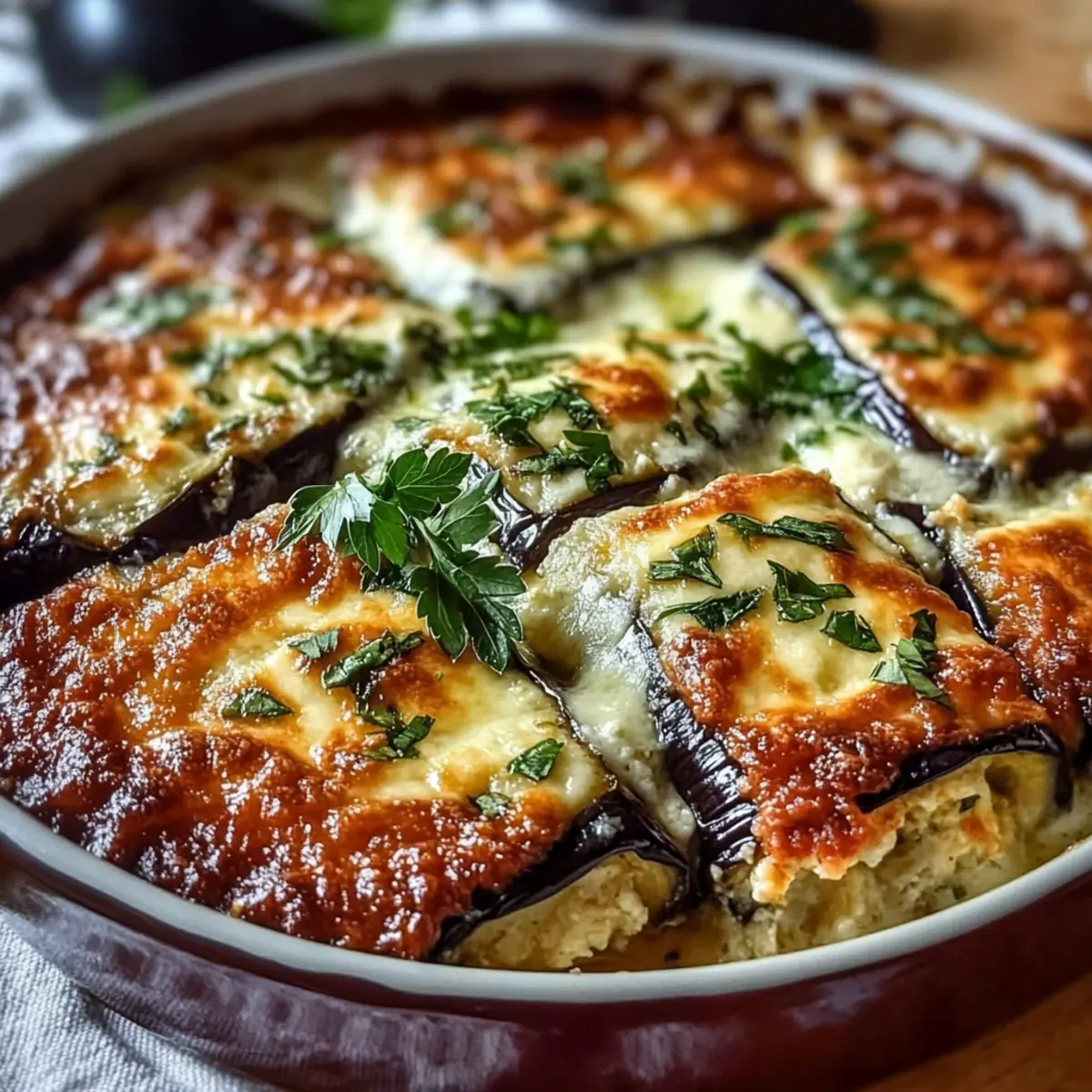
Once out of the oven, let the Ricotta Eggplant Casserole sit for 10-15 minutes before slicing. This resting time helps the layers set, making it easier to serve and ensuring every bite is packed with flavors.
What to Serve with Ricotta Eggplant Casserole
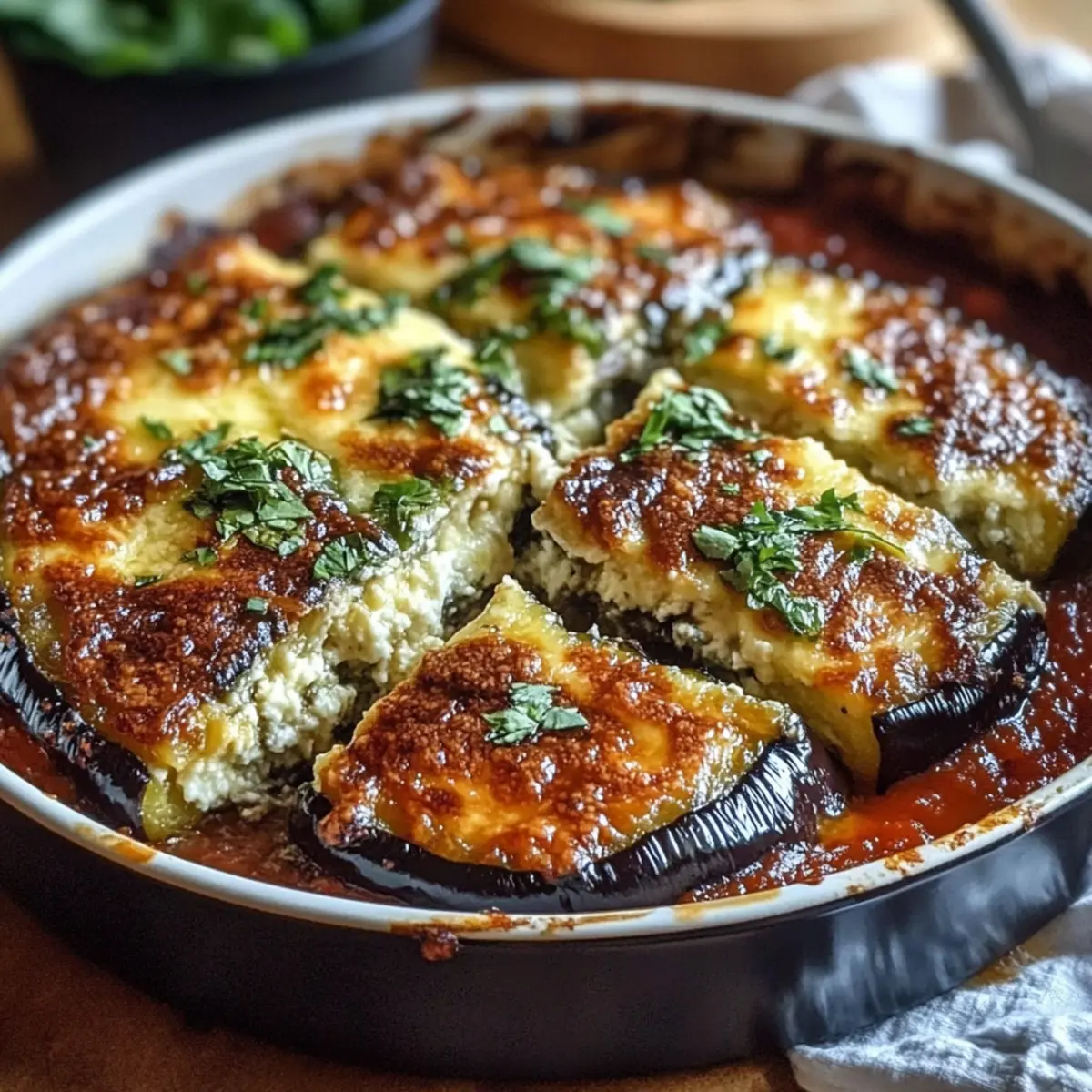
Building a delightful meal around this comforting dish creates a symphony of flavors and textures that will warm your heart.
-
Garlic Bread: The warmth of this buttery, garlicky classic is perfect for scooping up sauce, creating a delightful flavor harmony.
-
Simple Green Salad: A refreshing mix of greens with a light vinaigrette balances the richness of the casserole, making every bite feel lighter.
-
Roasted Vegetables: Seasonal roasted veggies add a pleasing crunch and a pop of color to your plate, enhancing your meal’s wholesome vibe.
-
Herbed Quinoa: Nutty quinoa, infused with fresh herbs, serves as a nutritious base that complements the casserole’s creamy layers and packs a protein punch.
-
Grilled Zucchini: The light, smoky flavor of grilled zucchini pairs beautifully, adding a subtle sweetness that contrasts nicely with the richness of the casserole.
-
Red Wine: A glass of fruity red wine enhances the Mediterranean experience, making your dining table feel like an Italian bistro.
-
Tiramisu: Finish on a sweet note with this classic Italian dessert, whose coffee and cocoa notes are the perfect conclusion to a satisfying meal.
Each addition creates a multidimensional dining experience that celebrates the beauty of homemade Italian-inspired comfort food!
Make Ahead Options
These Ricotta Eggplant Casserole preparations are perfect for busy weeknights! You can slice and salt your eggplant up to 24 hours in advance, then refrigerate it to ensure it remains fresh and ready for assembly. Additionally, you can prepare the tomato sauce and ricotta mixture one to three days ahead, storing them in airtight containers. When you’re ready to assemble, simply layer the prepped ingredients, add mozzarella, and bake. Just keep an eye on the cooking time, as it may vary slightly if the mixture is cold from the fridge. This way, you can delight your family with a comforting, homemade dinner without the last-minute rush!
Expert Tips for Ricotta Eggplant Casserole
-
Salt the Eggplant: Ensure to salt the eggplant well before cooking; this draws out moisture and bitterness, leading to a tastier casserole.
-
Layer Lightly: Avoid overcrowding the layers in your casserole; too many can affect cooking time and consistency, resulting in a soggy dish.
-
Fresh Herbs Matter: If using fresh herbs instead of dried ones, use them sparingly since fresh herbs have a more intense flavor; adjust according to taste.
-
Pre-Cook the Eggplant: Cooking the eggplant beforehand, whether by baking or pan-frying, enhances its flavor and ensures better texture in the Ricotta Eggplant Casserole.
-
Resting Time is Key: Letting the casserole rest for 10-15 minutes before serving allows the layers to set properly, enabling clean and beautiful slices.
-
Storage Tips: Leftovers can be stored in an airtight container for up to 3 days in the fridge or frozen for 3 months; reheat thoroughly before enjoying.
Storage Tips for Ricotta Eggplant Casserole
Fridge: Store leftovers in an airtight container for up to 3 days. This will keep the flavors fresh and allow for a quick, satisfying meal later on.
Freezer: For longer storage, freeze the Ricotta Eggplant Casserole in a freezer-safe container for up to 3 months. Make sure to label it with the date to track freshness.
Reheating: When ready to enjoy, thaw overnight in the fridge if frozen. Reheat in the oven at 350°F for 25-30 minutes, or until heated through. This helps to maintain that delicious, comforting flavor!
Serving Suggestions: Pair with a side salad or crusty bread when reheating to create a well-rounded meal that feels special every time you sit down to enjoy this pasta-free delight.
Ricotta Eggplant Casserole Variations
Feel free to put your own twist on this Ricotta Eggplant Casserole and make it your very own!
-
Dairy-Free: Substitute ricotta and mozzarella with almond or coconut-based cheeses for a creamy, vegan-friendly alternative.
-
Zucchini Addition: Layer thin slices of zucchini alongside the eggplant to bring an extra burst of flavor and nutrients to your casserole.
-
Spicy Kick: Toss in some diced fresh chili peppers or a sprinkle of cayenne for an added layer of heat that will awaken your taste buds.
-
Mixed Cheeses: Experiment with a blend of cheeses—try adding goat cheese or a sprinkle of feta for a tangy twist that elevates the dish.
-
Herb Variations: Swap dried herbs for fresh ones; basil, oregano, or thyme can add bright flavors that complement the overall richness beautifully.
-
Quinoa Layer: Incorporate cooked quinoa between layers for a protein boost and a delightful texture that adds heartiness without weighing the dish down.
-
Nutritional Boost: Mound extra vegetables like spinach or mushrooms into the ricotta mixture for added nutrition and flavor without changing the essence of the casserole.
If these variations have you inspired, don’t forget to check out my Ricotta Pistachio Honey bites for a delightful dessert that complements any meal, or try the comforting flavors of my Dolly Parton’s 5 Ingredient Casserole for another delicious twist on comfort food!
Ricotta Eggplant Casserole Recipe FAQs
What type of eggplant should I use for this recipe?
I recommend using globe eggplants for their rich flavor and texture, but feel free to try Italian or Japanese varieties. Each brings a unique taste that can elevate your Ricotta Eggplant Casserole. Just ensure the eggplant is firm and devoid of dark spots for the best quality!
How should I store leftovers from the Ricotta Eggplant Casserole?
Absolutely! Store leftovers in an airtight container in the fridge for up to 3 days. This keeps the flavors fresh and makes for a convenient meal ready to heat up after a busy day.
Can I freeze Ricotta Eggplant Casserole?
Yes, you can freeze it! Simply let the casserole cool completely, then transfer it to a freezer-safe container. It will keep well for up to 3 months. When you’re ready to enjoy it, thaw overnight in the fridge, and reheat in the oven at 350°F for 25-30 minutes until heated through.
What should I do if my eggplant turns out bitter?
The key to avoiding bitterness is salting your eggplant properly. Always slice it, salt generously, and let it rest for 30-60 minutes to draw out moisture and bitterness. Rinse well, pat dry, and you’ll be ready to go!
Are there any dietary considerations to keep in mind?
If you’re making this for someone with dietary restrictions, you can easily adapt the Ricotta Eggplant Casserole. For a vegan option, substitute the ricotta with tofu or a nut-based cheese, and instead of the egg, use a flax egg (1 tbsp ground flaxseed mixed with 2.5 tbsp water). Always check for allergies to common ingredients like dairy or gluten before serving!
Can I add other vegetables to the casserole?
The more the merrier! You can certainly add other vegetables such as zucchini, bell peppers, or spinach to enhance the flavor and texture of your Ricotta Eggplant Casserole. Just chop them up and layer them similar to the eggplant for a delightful twist!
Ricotta Eggplant Casserole: Your New Favorite Comfort Food
Ingredients
Equipment
Method
- Slice the eggplant into 1/4-inch rounds and sprinkle with salt. Let sit for 30 to 60 minutes, then rinse and pat dry.
- In a large skillet, heat olive oil over medium heat. Sauté the diced onion until translucent, about 5-7 minutes. Add minced garlic and cook for an additional 1-2 minutes.
- Pour in crushed tomatoes and tomato sauce. Add oregano, basil, salt, and pepper. Let simmer for 30 minutes.
- In a mixing bowl, combine ricotta, Parmesan, egg, and parsley. Season with salt and pepper.
- Cook eggplant slices either by baking at 400°F for 15-20 minutes or by pan-frying for 2-3 minutes per side until golden.
- In a baking dish, layer sauce, eggplant, ricotta mixture, and mozzarella. Repeat layers, finishing with sauce and mozzarella on top.
- Cover with foil and bake at 375°F for 30 minutes. Remove foil and bake for an additional 15-20 minutes until golden.
- Let sit for 10-15 minutes before slicing to allow the layers to set.
Leave a Reply